Urbanization is the process of expanding urban areas, transforming and modernizing non-urban communities, which results in growth and prosperity, but also the emergence of social, economic, and environmental challenges.

King Salman Foundation has developed its own definition for Urbanization

Urbanization is global phenomenon that continues to shape our societies, brining challenges that demand strong commitment and collaboration for an optimistic urban future

URBANIZATION
AROUND THE WORLD

As the world population has grown significantly, and global economies have become more industrialized over the past hundred years, more people have moved into cities. This process is known as Urbanization.

01

Human population have tended to increase over time.

02

Small groups of individuals have found reasons to come together to form groups.

03

With the advent of agriculture, small sedentary communities a small number of these settlements grew into what we now call cities.

04

This kind of growth often corresponds with a shift from one way of organizing labor to another.

More than
55%

of the world's population live in urban areas

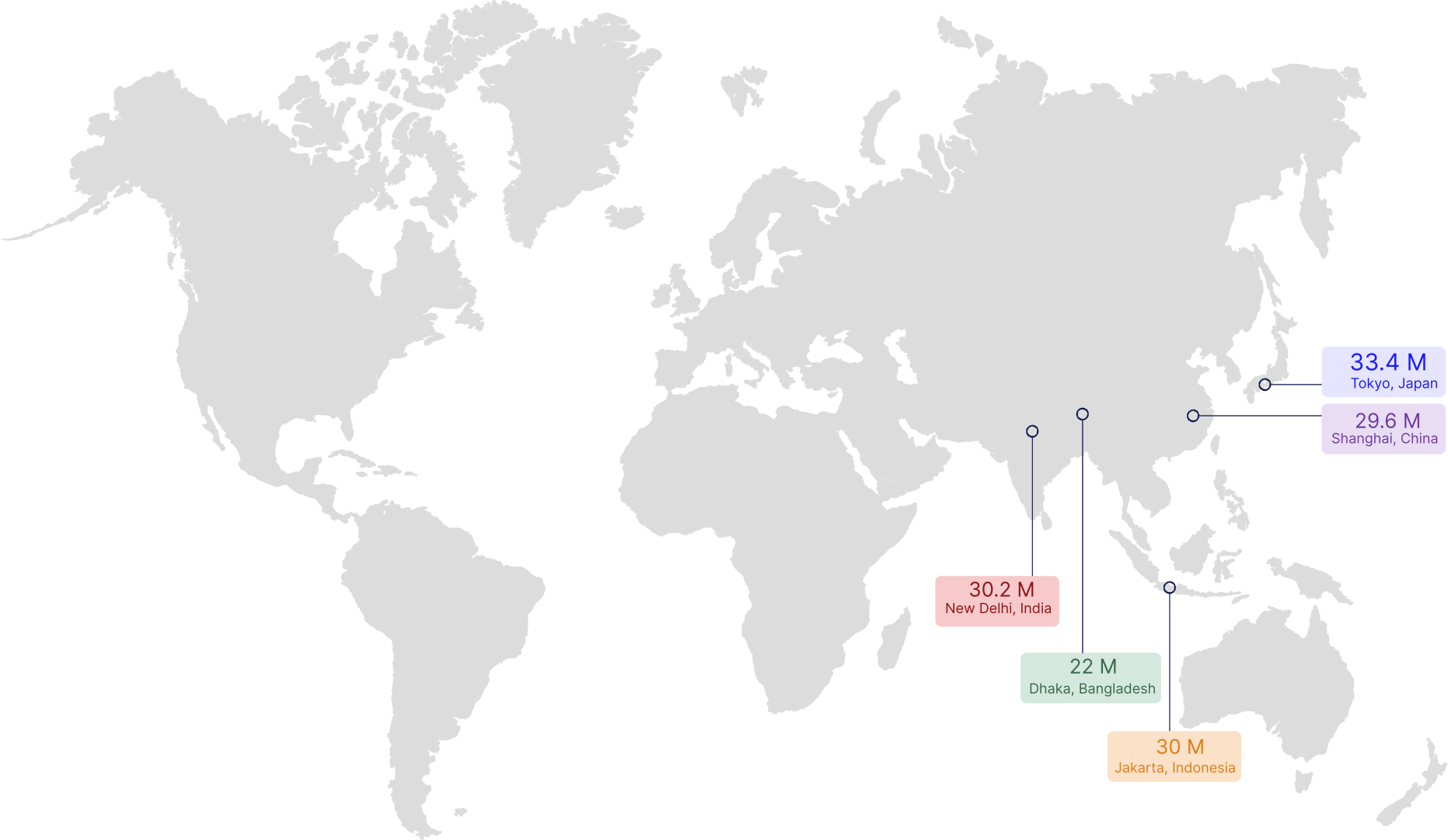
Cities with
+10M

people are called Megacities.

there are
now 33

Megacities in the
world.

Top 5 Megacities

megacities-map

Urban Expansion History at a Glance

The timeline of city growth and expansion into the intricate tapestry of urban development, tracing the footsteps of communities as they established the foundations of modern civilization, from the emergence of the first cities to the urban revolutions of the Industrial and post-Industrial eras.

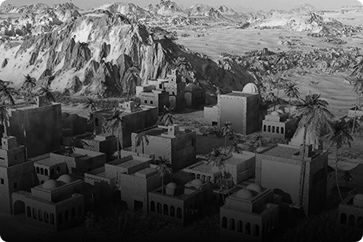
4000 BC

Mesopotamian Cities

  1. Located in the Middle East in the Tigris-Euphrates river valley
  2. Farmers lived outside city walls within walking distance of fields
  3. Agricultural cities (wheat, barley, sheep, goats)
  4. Walled cities with populations pf about 25,000
  5. Source: University of Washington

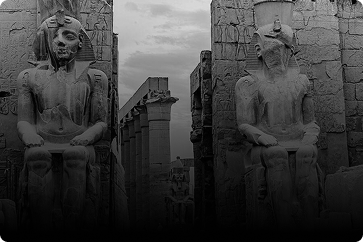
3300 BC

Egyptian Cities

  1. Located along the Nile river
  2. Similar to Mesopotamian cities but were not walled
  3. Slightly smaller than Mesopotamian cities

2500 BC

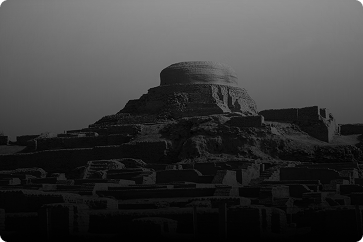
Cities of the Harappa Civilization

  1. Along Indus river in what is now Western Pakistan
  2. Important cities were Harappa and Mohenjo-Daro
  3. Streets were straight and laid out in gridiron pattern forming​
  4. Precincts/areas distinguished by specific economic activities
  5. Western edge of city was religious, political, and educational center​
  6. City had sewer system for collecting trash​
  7. First cities to show signs of planned development​
  8. rectangular blocks
  9. Source: Texas University

2000 BC

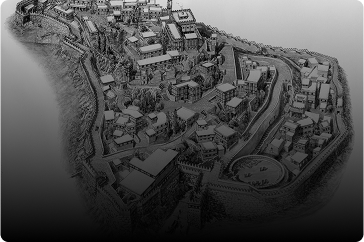
Mycenaean and Minoan Cities – present day Greece

  1. Athens emerged about 800 BC​
  2. Radial structure, with streets starting at center and extending straight out from the center​
  3. Sections of city also radiated out from center (so everyone would be at an equal distance from the center.)
  4. Source: University of Washington

500 CE

Medieval Urbanization

In 800 CE, the Middle-East and North Africa (MENA) were among the most urbanized regions in the world, as there were many cities founded with the expansion of Islam.
Source: The George Washington University

8th-11th centuries

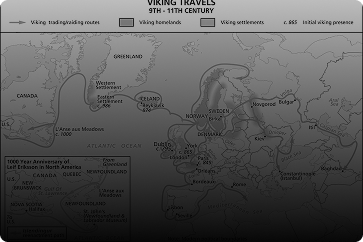
Viking Expansion

The Vikings established trade routes and settlements, leading to increased commerce and the development of towns, especially in areas like Dublin and York.

11th-13th centuries

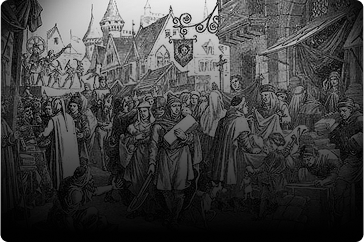
The Rise of Trade Fairs

Regular trade fairs, such as those in Champagne, France, became crucial for economic exchange, attracting merchants and fostering the growth of nearby towns.
In the 12th and 13th centuries, Champagne became the site of commercial fairs. There were six great fairs in Champagne, each of which lasted 49 days. These fairs, at which northern cloth was exchanged for spices, dyes, and precious objects from Mediterranean lands, made Champagne the commercial and financial center of Europe for a time.
Source: Britannica

12th-14th centuries

Agricultural Innovations

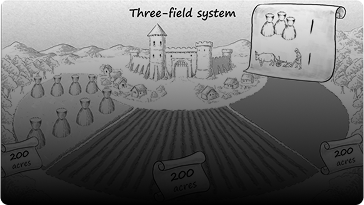
Advances in farming techniques, such as the three-field system and Crop Rotation, led to surplus production, which supported larger populations and Urban Migration.
Source: CEPR

12th-15th centuries

The Rise of Universities

The founding of universities in cities like Bologna, Paris, and Oxford promoted education and intellectual life, contributing to urban growth.
Source: Britannica

16th centuries

Technological Innovations

Key inventions, such as the steam engine (James Watt, 1765), spinning jenny (James Hargreaves, 1764), and power loom (Edmund Cartwright, 1785), revolutionized production methods.
Source: Bologna university

19th century

Transportation Advances & Public Health Issues

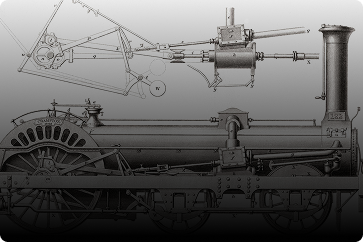
  1. Developments in transportation, including canals, railroads, and improved roads, facilitated the movement of goods and people, further driving urban growth. The first steam locomotive was built in the early 19th century, significantly impacting trade and travel.
  2. Rapid urbanization contributed to public health crises, with overcrowding leading to diseases like cholera and typhus. This spurred public health reforms and improvements in sanitation.
  3. Source: Britannica

19th century

Labor Movements

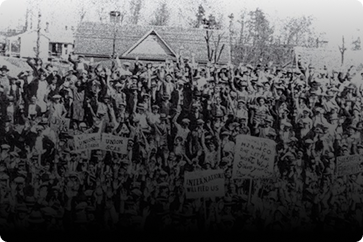
As workers faced harsh conditions, labor unions began to form in the early 19th century, advocating for better wages and working conditions, leading to strikes and other forms of protest.
Source: PBS

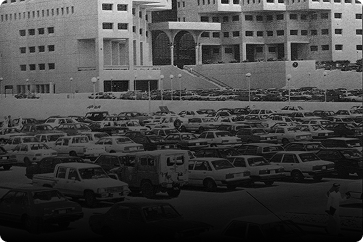
1912 CE

The Urban Migration

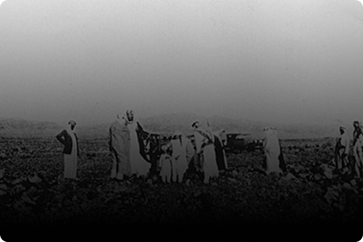
The first migration was established at the wells of Artawiyah, where convoys bound for Kuwait stop for water supply and rest.
The rapid success of the Artawiya migration has encouraged the number of migrations to expand largely. Usually, the first landmark to be built is the mosque, followed by houses built around it, and then the expansion begins slowly, and necessary facilities are provided for their daily lives, such as money, grain and agricultural tools to plow the land.
Source: King Saud University

1938 CE

Emergence of Natural Resources

Many new towns were built (both industrial; along the Tapline, and strategic military towns), as well as the growth and expansion of cities beyond their old walls, which resulted in the emergence of informal settlements within and on the outskirts of cities.
Examples of the new cities that have emerged are Dhahran, Ras Tanurah, and Dammam; which has transformed from a small village to a small city.
Source: Aramco

1970 CE

Economic Boom

The Kingdom of Saudi Arabia has developed and launched a series of Development Plans (Five- year Development Plans), which aimed to achieving a high rate of economic growth, by developing economic resources and obtaining the maximum amount of oil revenues during the longest possible period while preserving depletable resources, and reducing the dependence of the Saudi economy on its exports of crude oil by expanding the production base, and developing manpower through education and training.

2016+ CE

Growth & Prosperity

Saudi Vision aims to achieve the goal of increased diversification economically, socially, and culturally, in line with the vision of Saudi Crown Prince and Prime Minister Mohammed bin Salman. It was first announced on 25 April 2016 by the Saudi government. Vision 2030 focuses on 3 main themes; Vibrant Society, Thriving Economy, and Ambitious Nation.
Source: Saudi Vision 2030

Saudi Arabia

Globally

URBANIZATION IN KSA

Population Growth Rate per region

2023 2022 2021
Qassim
Buraydah City
Source: GASTAT

Total Population

34,218,169
2.41%
Location Area 2022 - 2023
2,150,000 km2

Total Population

4.3% of KSA

1,488,285

2.16%
2022 - 2023

73,000 km2

Location Area

Urban Community
Buraydah

50.5%

10 Provinces
22 Cities
154 Administrative Centres
560 Villages

Saudi

62%

21,215,265

Non Saudi

38%

13,002,904

Female

female icon
42.3%

14,479,113

Male

male icon
57.9%

19,739,056

Economic Inclusion
Environmental Sustainability
Access & Mobility
KSF Analysis Reference

To get a closer look on any area, simply pinch the screen to zoom in to it