Let’s Explore..
Urbanization

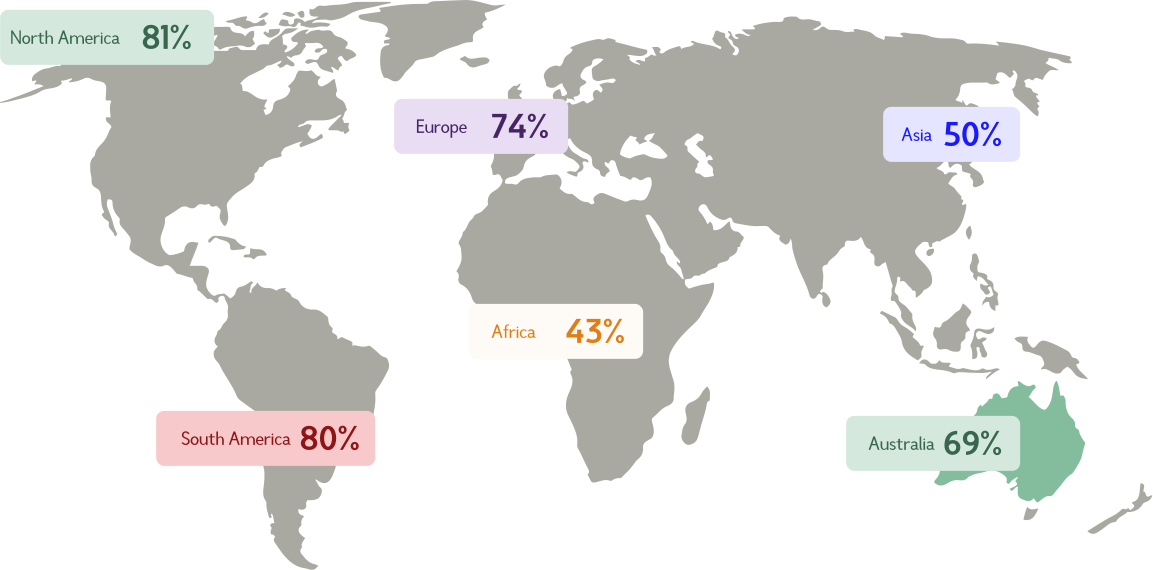
Urbanization is a defining phenomenon of this century, and the developing world is the locus in which this demographic transformation is taking place. In the decade since the preparation of the last World Bank urban strategy, the world has become, for the first time, more than half urban. Much of this urbanization will unfold in Africa and Asia, bringing huge social, economic and environmental transformations.

The world's urban population has reached 3.3 billion and by 2030 is
expected to grow to almost 5 billion

Types of

population

clusters

Since the beginning of history, as the global population grew, people began to gather and live together in shared spaces — especially after the discovery of agriculture. Over time, these small communities gradually transformed into what we now call cities. With that change, the way people lived and worked also began to shift in profound ways, laying the foundation for modern urban life. In the past hundred years, the world has seen major population growth and rapid industrial transformation. This pushed many people to migrate from rural areas to urban ones — a movement known as urbanization.

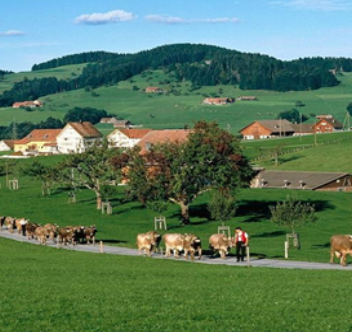
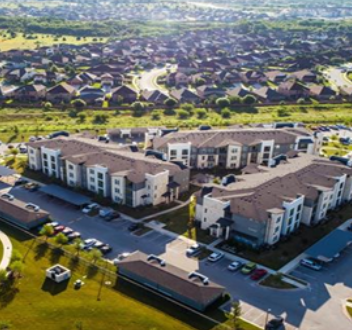
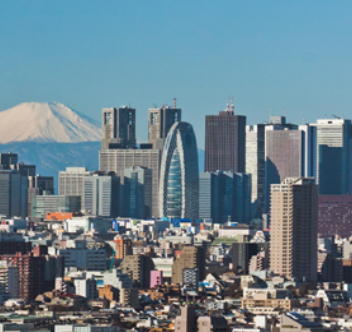
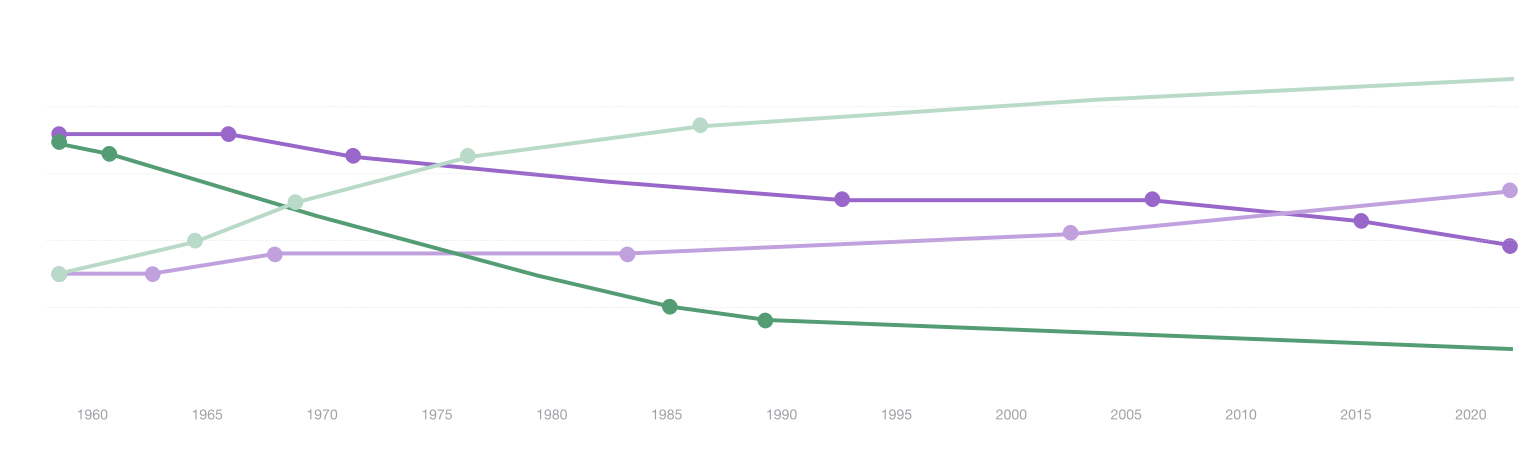
The European Commission applied a universal definition of settlements across all countries

Main Components Driving Urbanization Growth

01
٠١

Natural increase of Urban population

Population natural increase (or natural change) is the difference between the number of births, and the number of deaths over a period of time.

02
٠٢

Reclassification of Urban areas

Typically, the reclassification, occurring either through an expansion (contraction) of existing urban boundaries or through the addition (subtraction) of new urban areas, contributes positively to the rate of urban growth.

03
٠٣

Net migration of Rural to Urban areas

Net migration is the net total of migrants during the period, that is, the number of immigrants minus the number of emigrants, including both citizens and noncitizens.

Key Reasons Behind
Urban Expansion

TECHNOLOGICAL DEVELOPMENT

Technology Contributes To The Development Of All Sectors And Thus The Availability Of Better Quality Services.

SERVICE DEVELOPMENT

Services That Improve The Individuals Quality Of Life Attracts Populations To Urban Areas.

DEVELOPMENT OF RURAL AREAS

Many Rural Areas Are Now Gradually Becoming Urban Cities, Thanks To The Discovery Of Resources And Economic Development.

TRADE EXPANSION

The Flourishing Of Trade Leads To A Continuous Exchange Of Goods And Services And Contributes To The Development Of Enterprises And Companies.

ECONOMIC GROWTH

Economic Growth Contributes To The Creation Of Higher - Value Jobs In Urban Areas.